Skip to content
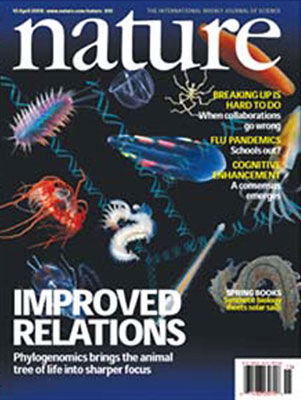
Nature Vol 452 2008-04

Nature Vol 452 2008-04

Broad phylogenomic sampling improves resolution of the animal tree of life Dunn CW, Hejnol A, Matus DQ, Pang K, Browne WE, Smith SA, Seaver E, Rouse GW, Obst M, Edgecombe GD, Sørensen MV, Haddock SH, Schmidt-Rhaesa A, Okusu A, Kristensen…
By Brad
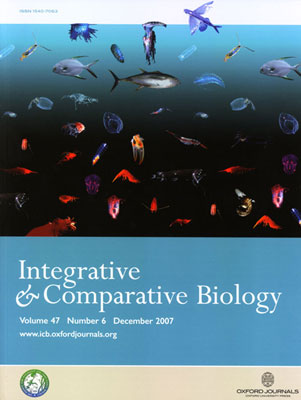
Integrative & Comparative Biology Vol 47 Number 6 2007-12

Integrative & Comparative Biology Vol 47 Number 6 2007-12

Phylogenetic analysis of lineage relationships among hyperiid amphipods as revealed by examination of the mitochondrial gene, cytochrome oxidase I (COI)William E. Browne, Steven H. D. Haddock, and Mark Q. Martindale The Hox gene complement of a pelagic chaetognath, Flaccisagitta enflataDavid…

By Brad
Developmental Biology Vol. 305 Number 1 2007-05

Developmental Biology Vol. 305 Number 1 2007-05

High-resolution fate map of the snail Crepidula fornicata: The origins of ciliary bands, nervous system, and muscular elementsAndreas Hejnol, Mark Q. Martindale, and Jonathan Q. Henry The littorinimorph gastropod Crepidula fornicata shows a spiralian cleavage pattern and has been the…

By Brad
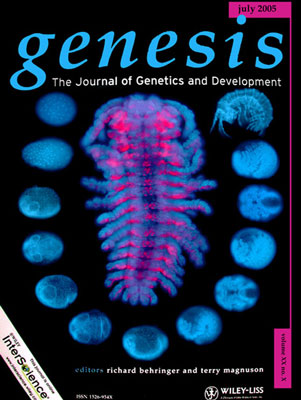
Genesis 2005-07

Genesis 2005-07

Stages of embryonic development in the amphipod crustacean, Parhyale hawaiensisBrowne WE, Price AL, Gerberding M, Patel NH Studying the relationship between development and evolution and its role in the generation of biological diversity has been reinvigorated by new techniques in…

By Brad
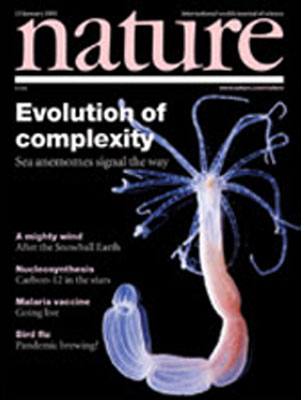
Nature 433 2005-01

Nature 433 2005-01

Unexpected complexity of Wnt gene family in a sea anemoneKusserow, A., Pang, K., Sturm, C., Hrouda, M., Lentfer, J., Technau, U., Hobmayer, B., Martindale, M.Q., and Holstein, T.W. The Wnt gene family encodes secreted signalling molecules that control cell fate…

By Brad
The Biological Bulletin Vol. 207 Number 1 2004-08

The Biological Bulletin Vol. 207 Number 1 2004-08

Rapid behavioral responses of an invertebrate larva to dissolved settlement cueMichael G. Hadfield and M. A. R. Koehl Larvae of the nudibranch Phestilla sibogae were used to study whether a natural dissolved settlement cue (from their prey, Porites compressa, an…

By Brad
Genesis 2004-05

Genesis 2004-05

Invited cover imageElaine Seaver Ventral view of a late stage larva of the polychaete Capitella capitata. The anterior end is marked by two orange larval eye spots. Annelids are one of the three major segmented animal groups and represent an…

By Brad
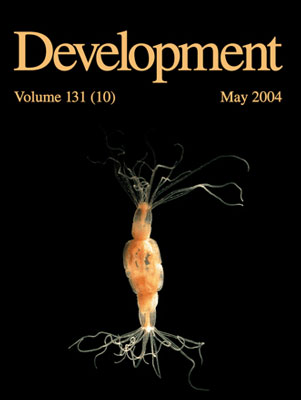
Development Vol. 131 Number 10 2004-05

Development Vol. 131 Number 10 2004-05

Investigating the origins of triploblasty: “Mesodermal” gene expression in a diploblastic animal, the sea anemone, Nematostella vectensis (phylum, Cnidaria; Class Anthozoa)Mark Q. Martindale, Kevin Pang, and John R. Finnerty Mesoderm played a crucial role in the radiation of the triploblastic…

By Brad
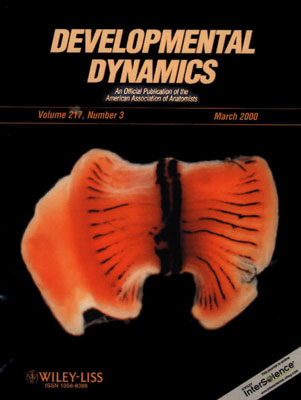
Developmental Dynamics Vol 217 Number 3 2000-05

Developmental Dynamics Vol 217 Number 3 2000-05

Characterization of gill-specific genes of the acorn worm Ptychodera flavaNoko Okai, Kunifumi Tagawa, Tom Humphreys, Nori Satoh, Michio Ogasawara Acorn worms are hemichordate deuterostomes that have remarkable gills thought to be homologous to pharyngeal gills in urochordates and cephalochordates, and…

By Brad
Back To Top